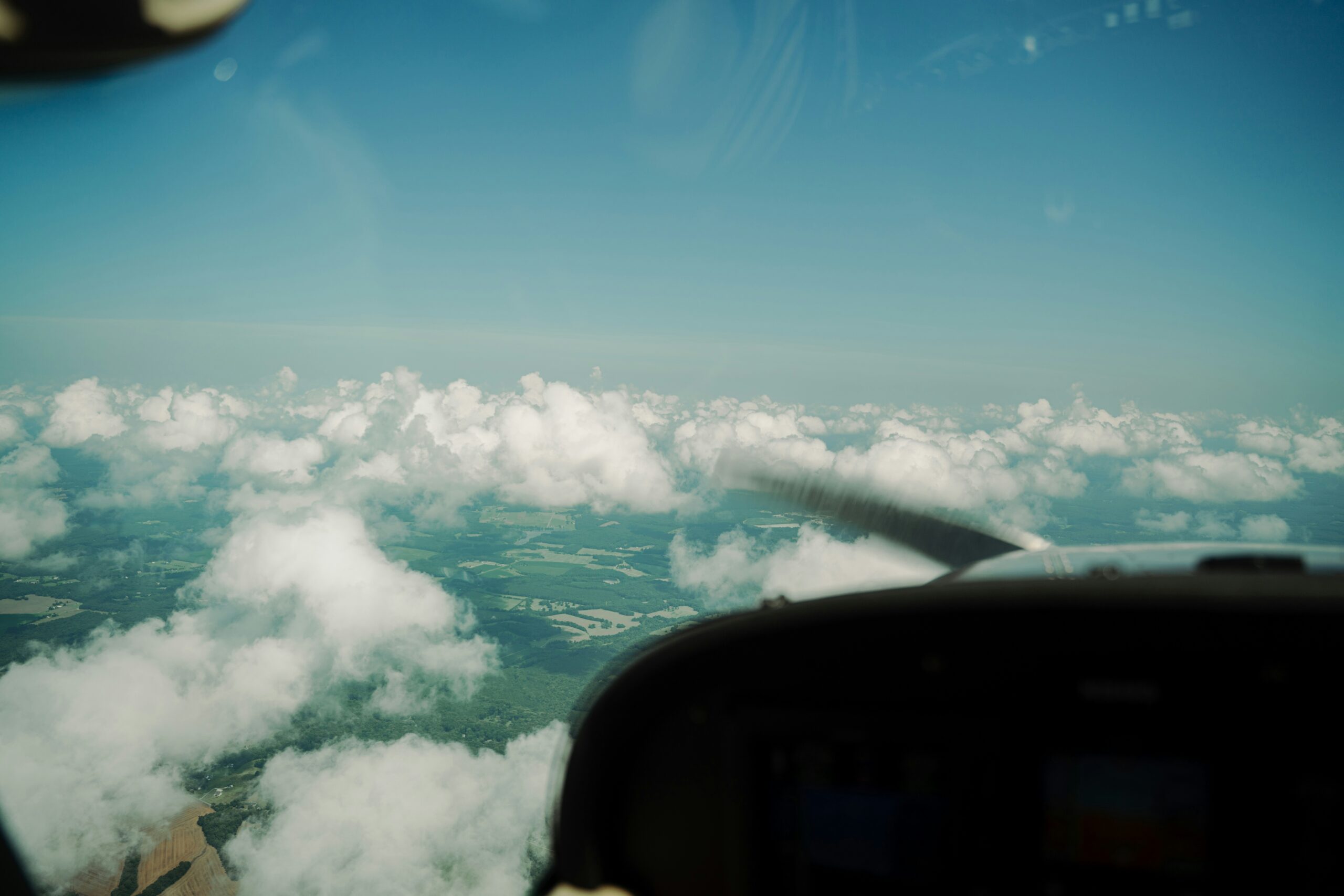
Flying through clouds can feel like stepping into a blank space. The horizon fades. Landmarks vanish. The sky and earth blend into one gray sheet. In these moments, pilots rely on one skill above all others, instrument flight.
Instrument flight allows a pilot to control and guide an aircraft using cockpit instruments instead of outside visual cues. This skill is vital in poor weather, at night, and in busy airspace. When visibility drops, training and trust in the instruments keep the flight safe and steady.
Understanding the Basics of Instrument Flight
Instrument flight means flying by reference to gauges and displays inside the cockpit. The pilot does not depend on the view outside. Instead, the pilot reads tools such as the attitude indicator, altimeter, airspeed indicator, and heading indicator.
The attitude indicator shows the aircraft’s position in relation to the horizon. The altimeter shows altitude. The airspeed indicator shows how fast the aircraft moves through the air. Each instrument plays a clear role. Together, they create a full picture of the aircraft’s position and motion.
In instrument flight, the pilot learns to scan these instruments in a steady pattern. This scan must be smooth and constant. If one instrument changes, the pilot cross-checks the others. This habit helps prevent small errors from turning into serious problems.
Why Instrument Flight Matters in All Conditions
Many people think instrument flight is only needed in storms or thick clouds. In truth, it supports safe flying in many conditions.
Weather can change fast. A clear sky can turn hazy. Fog can rise from a valley. Rain can reduce visibility in minutes. When a pilot is trained in instrument flight, sudden changes cause less stress. The pilot knows how to shift focus from outside to inside the cockpit without panic.
Night flying also depends on instrument flight skills. At night, depth perception is weak. Lights on the ground can look like stars. A dark field can appear like open sky. Instruments provide steady, reliable data when the eyes cannot.
Even in clear weather, instrument flight improves accuracy. It helps pilots hold exact altitudes and headings. It supports smooth climbs and descents. Precision matters in controlled airspace and near busy airports.
Training for Instrument Flight
Becoming skilled in instrument flight takes focused training. A pilot must earn an instrument rating. This rating proves that the pilot can fly safely in low visibility using instruments alone.
Training begins with learning each instrument in detail. Students practice reading and interpreting every gauge. Instructors teach how instruments work and how they may fail. Understanding limits is as important as understanding function.
Pilots then practice under simulated conditions. Instructors may use a view-limiting hood that blocks the outside view. This forces the student to rely only on instruments. The student learns to trust the panel, even when the body senses something different.
The body can give false signals during flight. In clouds, a pilot may feel like the aircraft is turning when it is level. This is called spatial disorientation. Instrument flight training teaches pilots to ignore these false sensations and trust the data in front of them.
Practice includes holding patterns, instrument approaches, and navigation using radio aids and GPS. Each lesson builds skill and confidence.
Mastering the Instrument Scan
A strong instrument scan is the heart of instrument flight. Without it, small errors grow fast.
The scan is not random. It follows a pattern. Many pilots use a hub-and-spoke method. The attitude indicator acts as the center. The pilot looks at it often. Then the eyes move to other instruments and return to the center.
For example, when climbing, the pilot checks the attitude indicator first. Then the altimeter to confirm altitude change. Then the airspeed to ensure speed stays safe. The cycle repeats every few seconds.
Consistency is key. A smooth scan keeps the aircraft stable. Long pauses on one instrument can cause drift. Quick, calm eye movement prevents this.
Over time, the scan becomes natural. The pilot no longer thinks about each step. The process flows without strain.
Navigating Through Weather
Weather is one of the biggest reasons to use instrument flight. Clouds, rain, and fog can block all outside reference.
When flying in clouds, the world outside turns white or gray. There is no visible horizon. Without instrument flight skills, a pilot can lose control in seconds. The inner ear sends false signals. The aircraft may bank or climb without the pilot noticing.
Instrument flight keeps control steady. The pilot maintains heading, altitude, and speed by watching the panel. If turbulence hits, the pilot makes small, smooth corrections.
Instrument approaches allow safe landing in low visibility. These procedures guide the aircraft down to the runway using radio signals or satellite guidance. The pilot follows precise paths and altitudes. At a certain point, if the runway is not visible, the pilot performs a missed approach and climbs away safely.
This system reduces risk. It gives clear steps to follow, even when weather is poor.
Building Confidence and Discipline
Instrument flight requires mental focus. It demands discipline and calm thinking.
Pilots must stay ahead of the aircraft. They plan the next step before it arrives. During descent, they brief the approach. During cruise, they review weather updates. Staying prepared reduces workload during critical moments.
Confidence grows with practice. Each flight in controlled conditions builds skill. Over time, the pilot learns to stay calm in clouds and low visibility.
Still, respect for limits is vital. Instrument flight does not remove all risk. It reduces risk when used with good judgment. Pilots must follow rules, check equipment, and monitor weather closely.
Flying Beyond Sight
Flying without a clear view outside may seem unsettling at first. Yet with proper training, instrument flight becomes a powerful tool. It allows safe travel through changing skies. It supports accurate navigation and smooth landings.
Mastering instrument flight is not about ignoring fear. It is about replacing fear with knowledge and practice. When the horizon disappears, the instruments remain steady. They tell the truth, even when the senses do not.
In all conditions, clear or cloudy, day or night, instrument flight gives pilots control and confidence. It turns uncertainty into skill. It allows flight to continue safely, even beyond sight.